
Who we are
The Felix Rutledge Society was founded in 1970 by the physicians Dr. Rutledge trained to honored him. The Society's purpose to share new developments in gynecologic oncology and to stimulate original investigation in gynecologic oncology mirrors Dr. Rutledge's philosophy and values in the practice and art of medicine. The society consists of alumni trained in gynecologic oncology at the University of Texas MD Anderson Cancer Center, gynecologic oncology faculty of the Department of Gynecologic Oncology and Reproductive medicine and select honorary members who have made signficant contributions to the field.
The idea of The Felix Rutledge Society stemmed from a number of conversations during the 1964-65 fellowship year. Dick Boronow, Julian Smith and several other fellows occasionally talked of such a society. In 1969 Dick Boronow called several Anderson fellows and asked that they meet at The A.C.O.G. District VII meeting in Kansas City to discuss formation of the society. Attending the meeting were Boronow, Hughes, Masterson and Piver. The first meeting of the society was held on Wednesday, May 27, 1970 in the auditorium at MD Anderson.
ABOUT FELIX RUTLEDGE
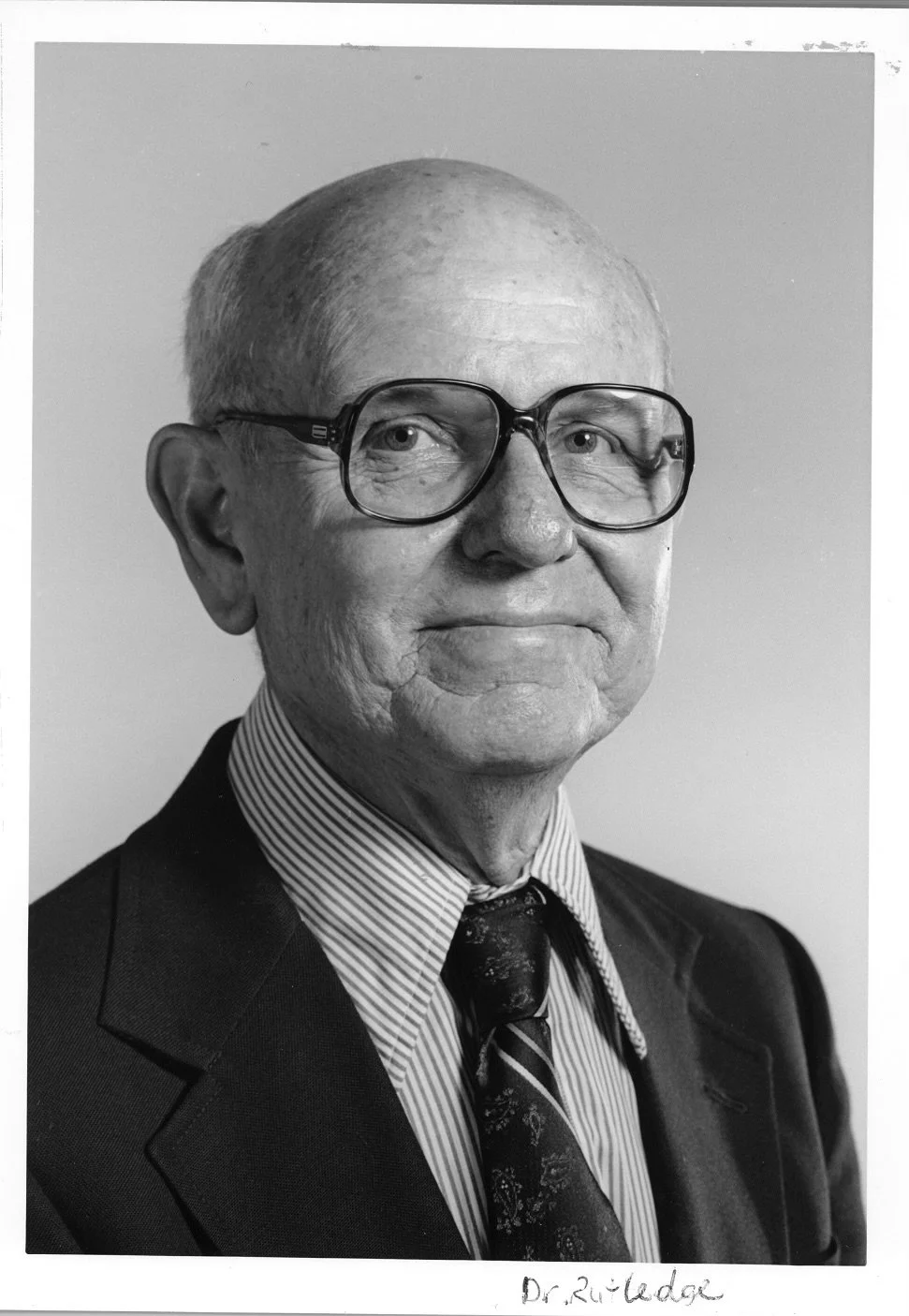
Dr. Felix Noah Rutledge was an internationally known gynecologic surgeon who developed innovative treatments for women with cancer who was the first chair of Gynecologic Oncology at the University of Texas MD Anderson Cancer Center. During his 38-year association with The University of Texas M.D. Anderson Cancer Center, Dr. Rutledge helped improve the outlook for thousands of women with gynecologic cancers. He was at the forefront in designing conservative, individualized cancer therapy that extended survival and reduced post-surgical complications.
He was born in Anniston, Alabama, on November 20, 1917, the only son of Josie and Felix Noah Rutledge, Sr. He began planning to study medicine as a youth. He received an undergraduate degree at the University of Alabama in 1939 and earned his medical degree at Johns Hopkins University School of Medicine in 1943. He completed an internship and residence training in three specialty areas at Johns Hopkins Hospital before moving to Houston. Dr. Rutledge joined the M.D. Anderson staff in 1948 on a part-time basis. At that time, patients were seen in temporary quarters on an old family estate while the first hospital facility was being planned and built in the then-new Texas Medical Center. He became the first chairman of the Department of Gynecology when M.D. Anderson opened in 1954 and continued in that post until he retired in 1986. Dr. Rutledge was instrumental in developing the Department of Gynecology at M.D. Anderson into one of the nation's most productive academic training centers. He was widely acclaimed for his work in pelvic exenteration, as well as poineering less radical methods to remove cancers and preserve patient function and body image. In addition to his surgical and teaching skills, Dr. Rutledge designed clinical trials that demonstrated conclusively the superior results of applying multidisciplinary therapy to treat many forms of gynecologic cancer. His research led to extensive publications in leading professional journals and contributions to several textbooks. As a teacher, he personally trained over 100 post-graduate fellows in gynecologic oncology, many of whom have gone on to hold senior academic positions in medical institutions around the world.
He was one of five physicians who created the Subspecialty of Gynecologic Oncology for the American Board of Obstetricians and Gynecologists. Dr. Rutledge received many honors and awards throughout his life including the Janeway Medal, American Radium Society (1982); the Distinguished Service Award, American Cancer Society (1985); the Heath Memorial Award (1985); Fellow of the Society of Scholars, Johns Hopkins University (1994); Honoris Causa in Medicine, University of Bologna, Bologna, Italy (1994); Honoris Causa, University of Barcelona, Barcelona, Spain (1997); Honorary Fellow, Royal College of Obstetrics & Gynecology of Great Britain; and Honorary Fellow, Royal College of Obstetrics and Gynecology of South Africa.